Sees the heat.
An infrared sensor integrated in the caliper reads the disc temperature without touching it. A second sensor measures the caliper, close to the fluid.

Pinza, disco e sensori
VAT included
SKU: SP-ATLAS-CD-R
A normal brake tells you nothing until something goes wrong. Atlas measures what happens inside the caliper and on the disc at every stop and turns it into clear alerts on V.E.G.A., before it becomes a problem.
An infrared sensor integrated in the caliper reads the disc temperature without touching it. A second sensor measures the caliper, close to the fluid.
Two strain gauges bonded to the caliper bridge sense how much it opens under pressure: Atlas estimates how hard you are braking without touching the fluid. It is the basis for understanding lever, friction and fade.
A magnetic sensor behind the piston follows how far it advances as the pad wears, outside the fluid and with no wires on the pad: you change pads as always, without removing the caliper.
The rule. The electronics observe, measure and alert: they never touch the braking.
Rotate the system, open the exploded view or highlight the sensors: caliper and disc turn transparent and only Atlas’s “eyes” remain. Tap a sensor to see what it measures.
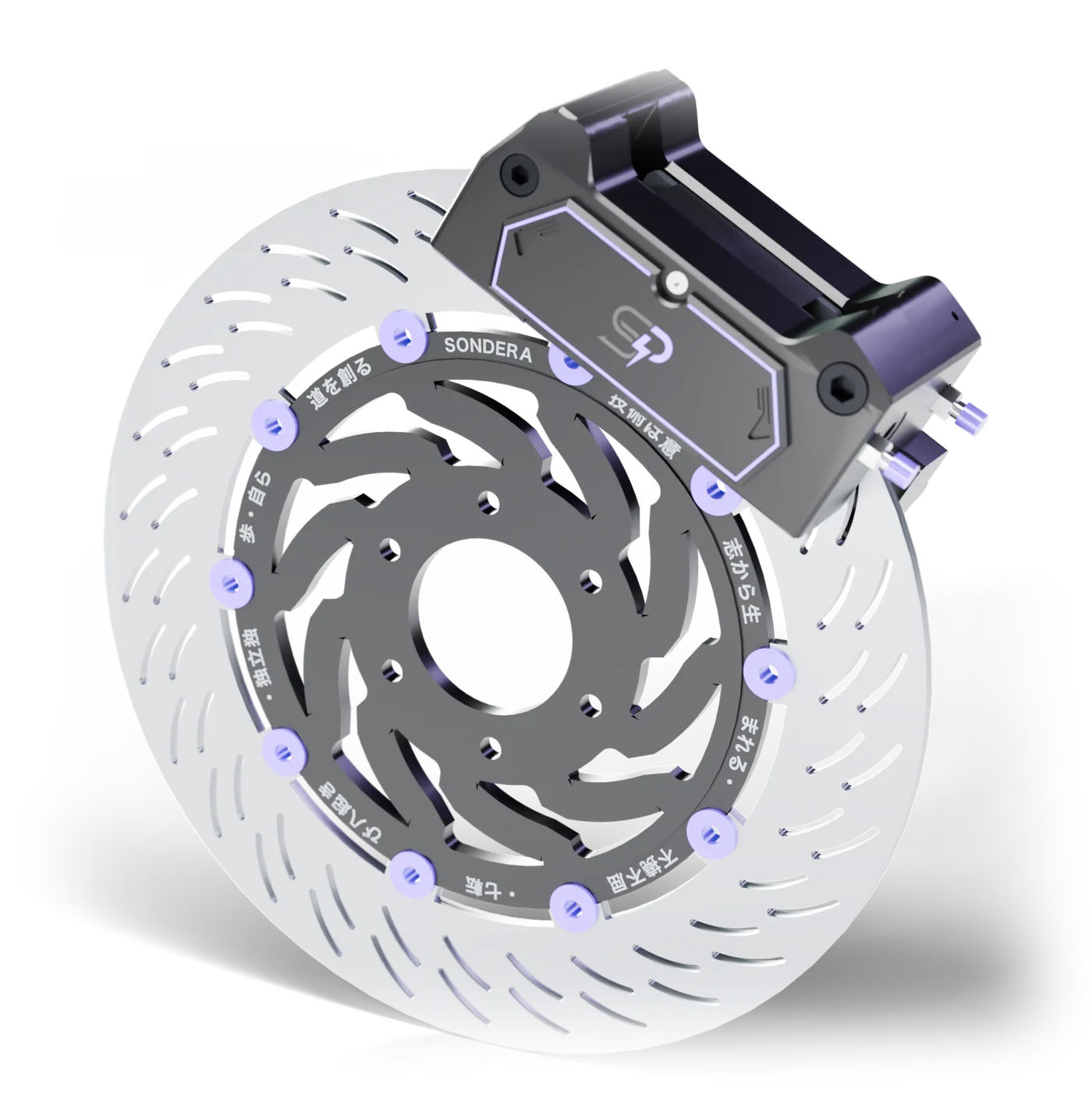
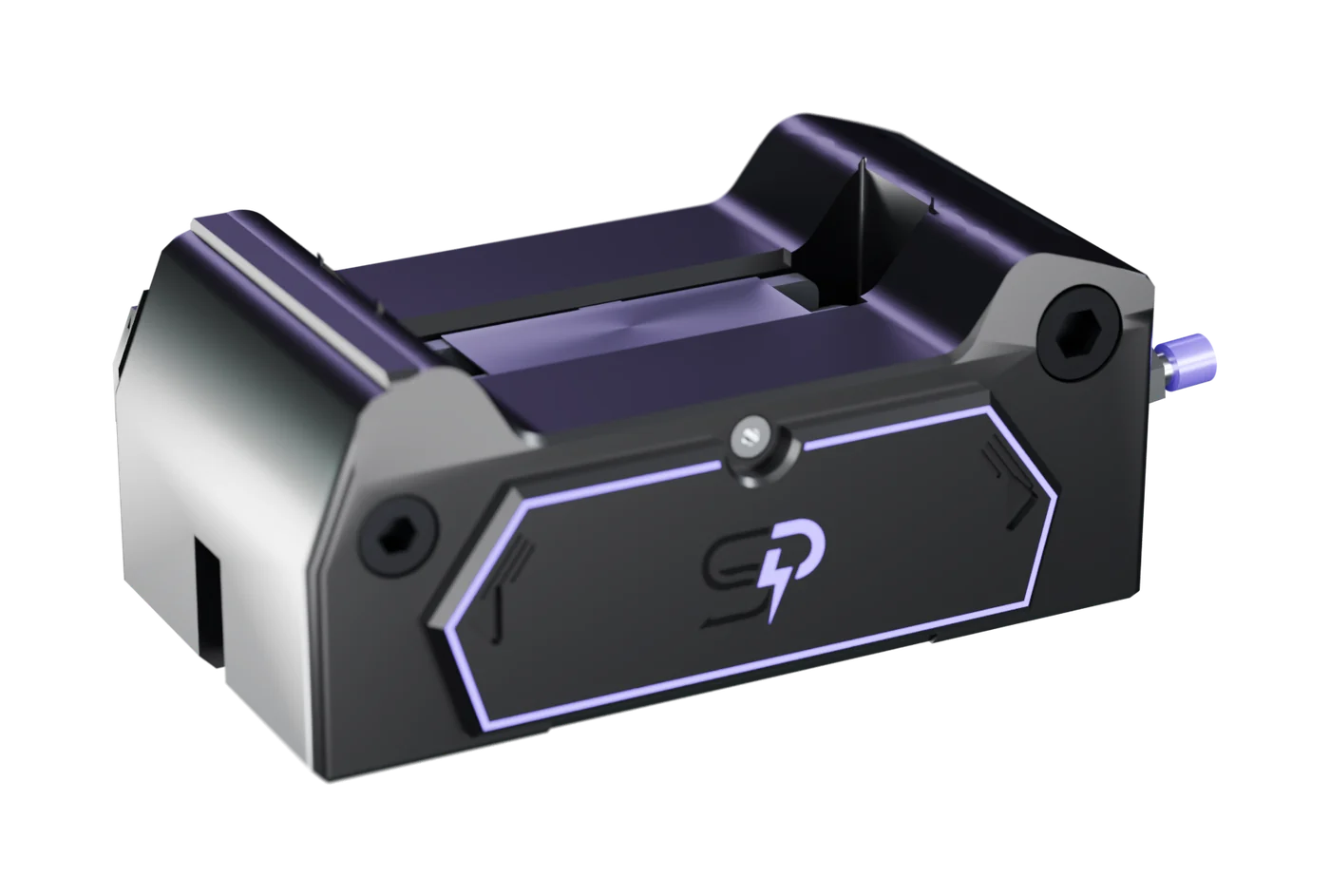
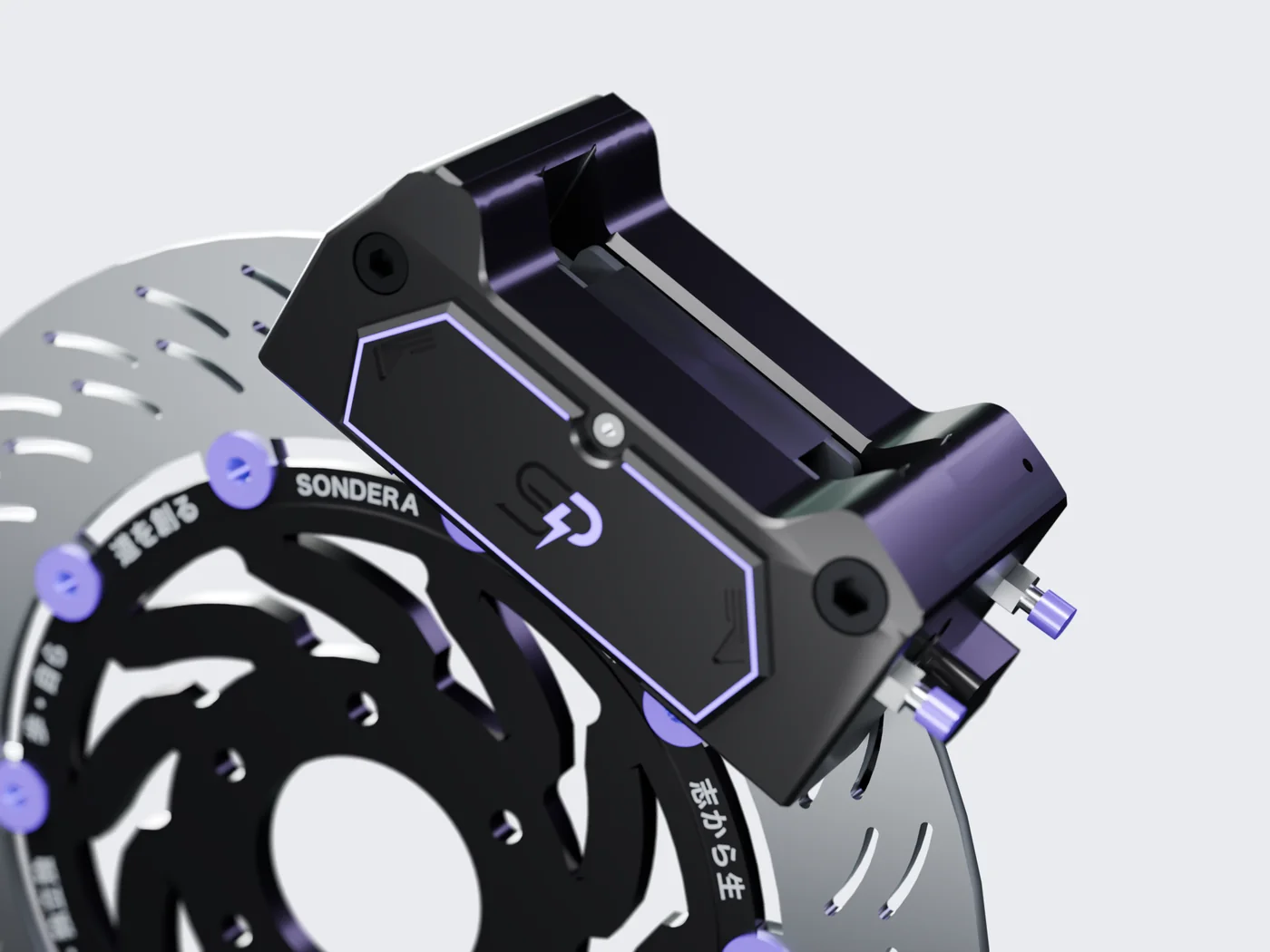
Simplified 3D model of the prototype from CAD: colours and finishes are indicative. The strain gauges behind the piston are too thin to be seen in the model.
The heart of Atlas is not the metal: it is the sensors. They sit inside the caliper, each in its own machined seat, with wires potted in resin: no loose cables, no extra fittings on the hydraulic system. A small hub on the sprung part of the bike reads them and sends them to V.E.G.A. over Bluetooth.
A narrow-cone infrared thermometer watches a painted band of the disc on every wheel turn. It measures up to 380 °C; beyond that, V.E.G.A. estimates the temperature from your braking and tells you so.
Two strain gauges on the caliper bridge read how much it opens when you squeeze the lever. Every caliper is calibrated at the end of production: no sensor in the fluid, no extra leak point.
A Hall sensor with its magnet, outside the fluid, follows the piston as it advances while the pad wears. Pads are changed from the outside, as always.
A platinum sensor in the body measures the heat passing from the pistons to the fluid, the most delicate part of the system.
An accelerometer on the fork leg picks up disc pulsations before they become an annoyance at the lever.
* “Design” values calculated on the chosen components; the readings in the panels are examples. The sensors give valid data with the caliper up to about 80 °C: beyond that, V.E.G.A. switches to estimates and tells you. Everything will be confirmed by bench calibration.
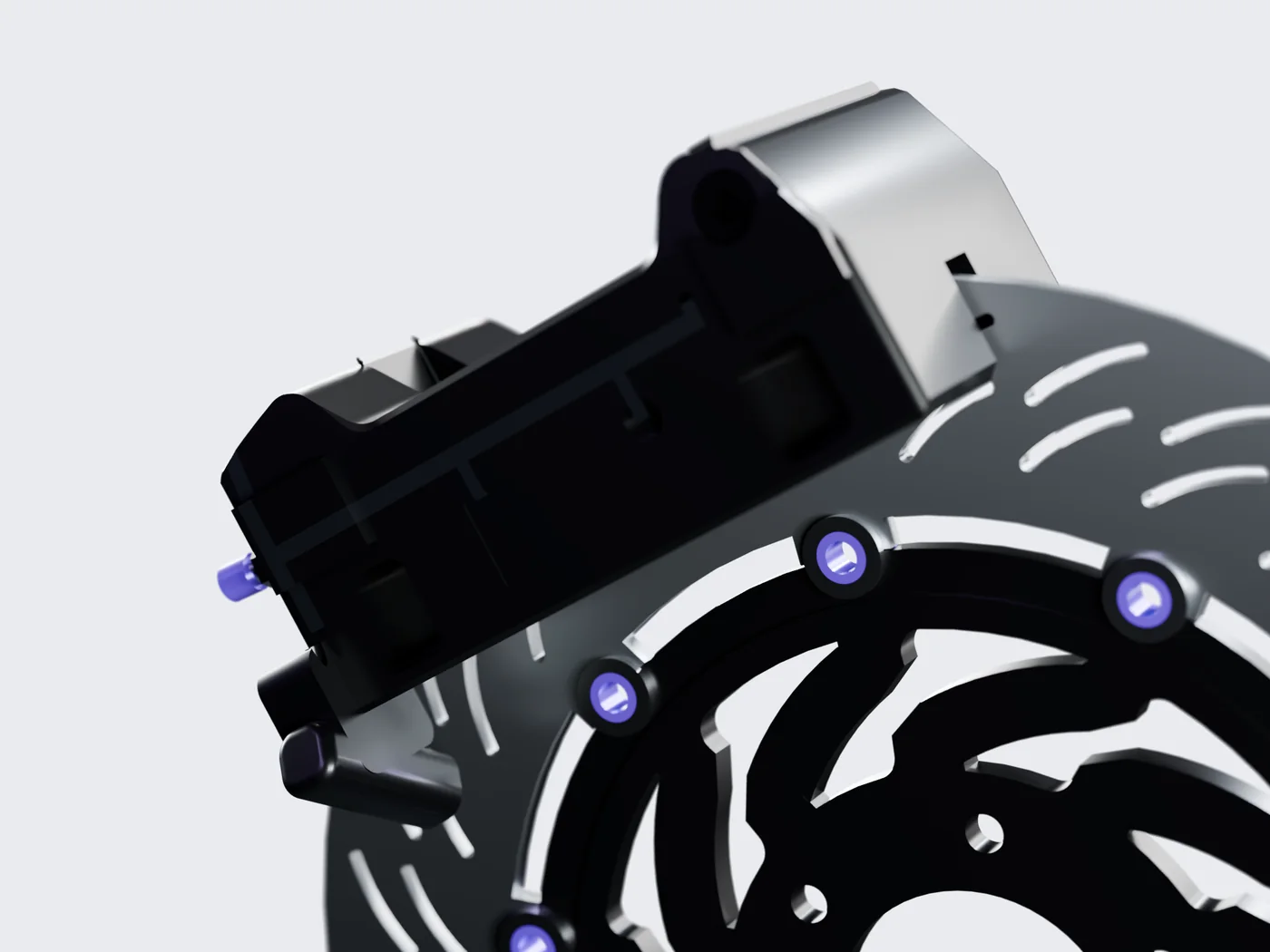
The hub reads all the sensors with a precision converter, saves events in memory that is never erased and sends them to V.E.G.A. If the link drops, V.E.G.A. tells you straight away: old data is never shown as current.
Atlas does not just show you numbers: it cross-checks them and tells you what they mean. Every feature is an indication for you, never an intervention on the bike.
It estimates how much the pad “bites” and alerts you when that drops with heat, before you feel it at the lever.
It follows the temperature reaching the fluid and tells you how much margin is left before the system gets into trouble.
It compares pressure and travel over time: if you need more and more lever for the same stop, there is probably air.
If the disc heats up without you braking, a pad is rubbing. It also tells you which side.
It measures the pulsations you feel at the lever and alerts you when the disc needs checking.
It counts the heat cycles the fluid has been through and reminds you when it is time to bleed.
With V.E.G.A.’s GPS every stop has a point on the circuit: pressure, temperature and deceleration corner by corner, lap after lap.
The friction and fade estimates also use the bike’s acceleration, read by an accelerometer on V.E.G.A. or on the hub.
On V.E.G.A. you find temperatures, pressure and wear on a screen designed to be read at a glance. When needed, the alert appears by itself. And if you have an intercom, you can ask the AI coach anything.
Disc temperatures, pressure and wear updated in real time.
A few clear messages when it counts: fade, hot fluid, pads at end of life.
Review your braking lap by lap and compare sessions.
With the intercom you talk to the V.E.G.A. AI coach like an engineer on the pit wall. It reads the Atlas data and answers you by voice: no screens to look at down the straight.
Example dialogues with illustrative values: wording and answers may change in the final version. The coach gives guidance to the rider and never acts on the braking.
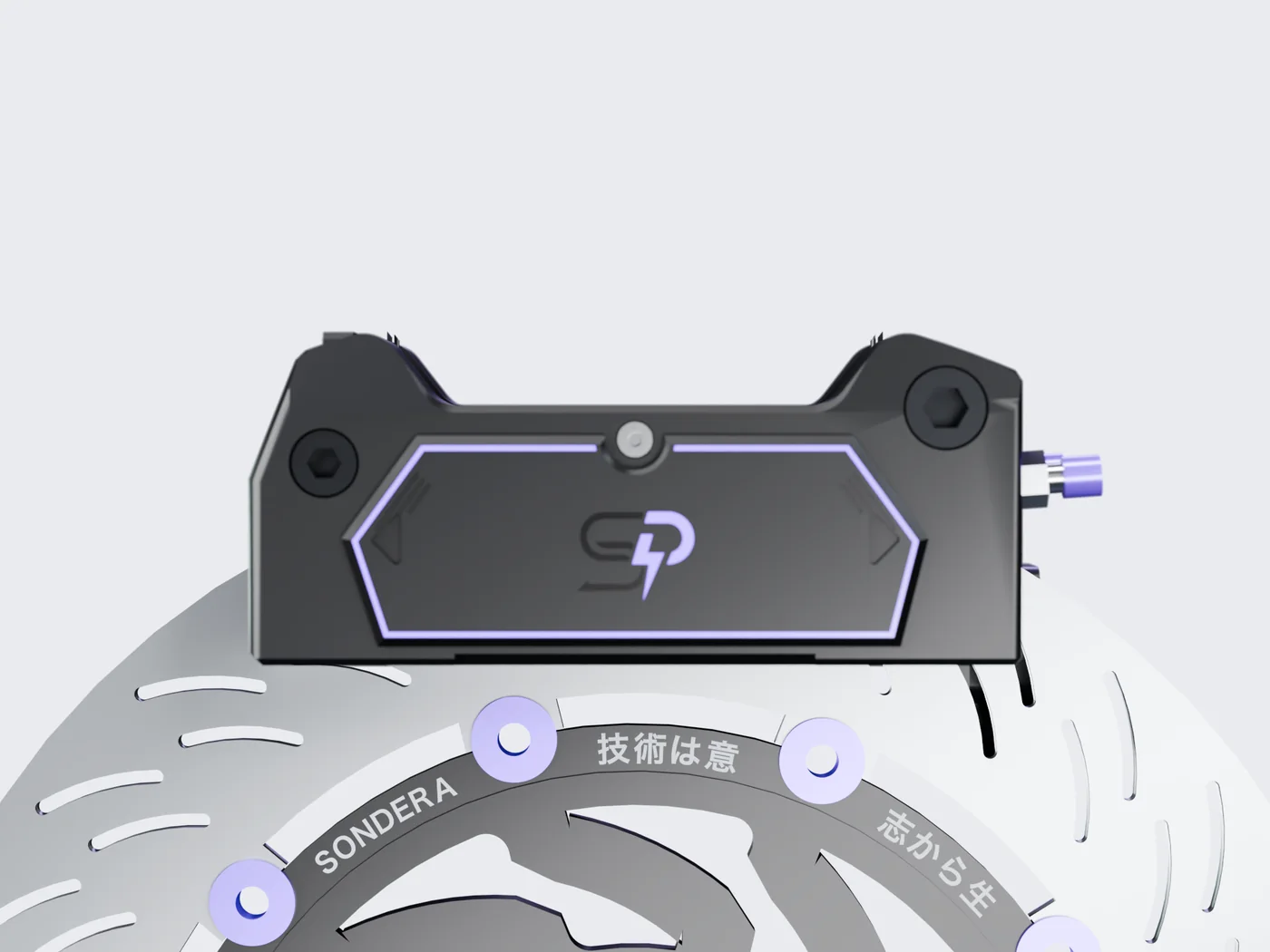
The body is made of two aerospace-grade aluminium halves machined from solid, centred on dowels and joined by three class 12.9 steel bolts. On the outer face, a shield with the SP logo engraved and filled with resin. The pistons come in two different diameters, to spread the pressure evenly across the pad.
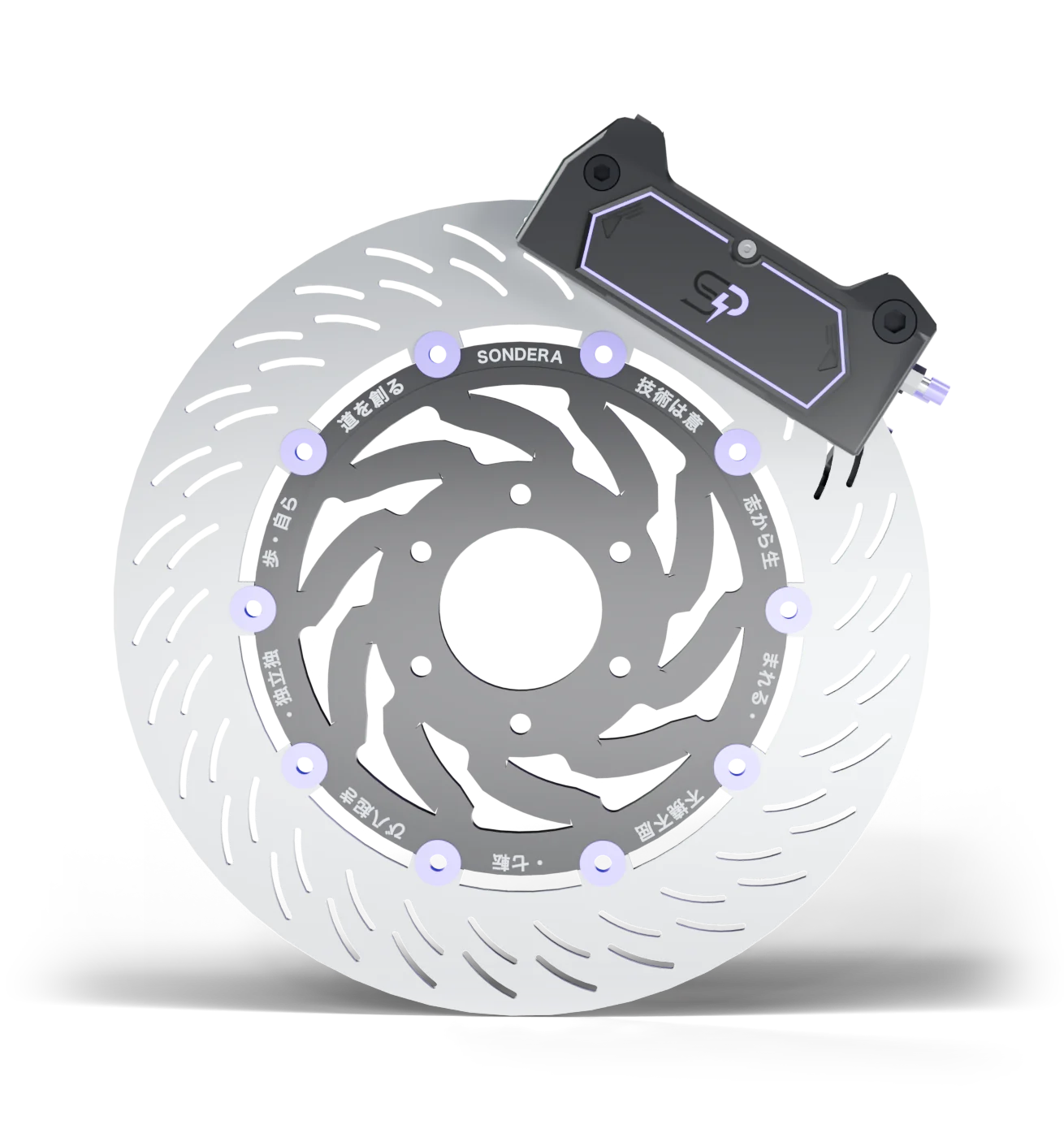
The martensitic stainless steel braking ring is joined to the aluminium carrier by ten floating bobbins: the disc expands with heat without warping. The carrier has ten curved turbine spokes, one per bobbin, turning in the same direction as the blade slots: the disc reads as a single vortex, even standing still. The slots help clean the pad. On the carrier, laser-engraved, the kanji that tell the Sondera spirit.
No sensor and no line of software can increase, reduce or modulate the braking. Lever, master cylinder, fluid and pistons work as in a traditional system.
Flat battery, loose cable or failed hub: you lose the data, not the braking. V.E.G.A. tells you straight away that the data is not available.
The sensors sit in their seats inside the caliper, with wires potted in resin; the sensitive electronics sit on the sprung part of the bike, away from the disc.
Per caliper, VAT included, shipping excluded. Product for use on track and private land. You pay nothing now: we confirm the final price before the order.
How the reservation works. Atlas is in the prototype and bench-testing stage. You reserve today without paying; when it is ready we contact you to check compatibility with your bike and confirm the order.
Free, no-commitment reservation: nothing to pay now. We will contact you when the product is ready to confirm the order.
Only on track and on private land closed to traffic. Sondera Atlas is a prototype and is not homologated for use on public roads. Fitting must be carried out by a qualified mechanic and correct use is the rider’s responsibility.
Yes. The electronics have no control over the braking: if the hub switches off you only lose the data. Lever, master cylinder and calipers work as in a traditional system.
V.E.G.A. is the screen where you read data and alerts. Without V.E.G.A. the system brakes normally, but the smart features have nowhere to show up.
Disc temperature (infrared), caliper temperature, system pressure, pad wear and vibration. From this data Atlas estimates friction, fade, fluid boiling risk, air in the system, dragging and fluid life.
Bikes with radial mounts at 100 mm centres and a 17″ wheel. The disc centre is machined to the hub dimensions of your bike. On paper the dimensions match, for example, Ducati Panigale V2 (2020–24), Aprilia RS 660 and TM SMR 125 (with spacers for the 320 disc). It is not suitable for bikes with 108 mm radial mounts or for motocross and enduro bikes with a 21″ wheel. Send us make, model and year: we check the dimensions on your bike before shipping.
Atlas is in the prototype and bench-testing stage. You can already reserve it for free: it is a pre-order with no payment and no commitment. When it is ready we contact you to check compatibility and confirm the order.
They are renders of the prototype’s 3D model. The real product may differ in finishes and colours. The V.E.G.A. screen shows example values.
Radial caliper, floating disc and sensors that talk to V.E.G.A. The braking stays yours, the data becomes yours.